

 日本語
日本語




SORC Spatial Audio Powers the Open-Ear Experience on EarFun Clip 2
 2026.04.03
 334
334
As open-ear earbuds continue to evolve, delivering a stable and convincing spatial audio experience without an occluded ear canal remains a key technical challenge. To address this, AncSonic has developed a complete on-device spatial audio pipeline based on its proprietary Sound Optimization & Rendering Core (SORC) architecture, now commercially deployed on the EarFun Clip 2.
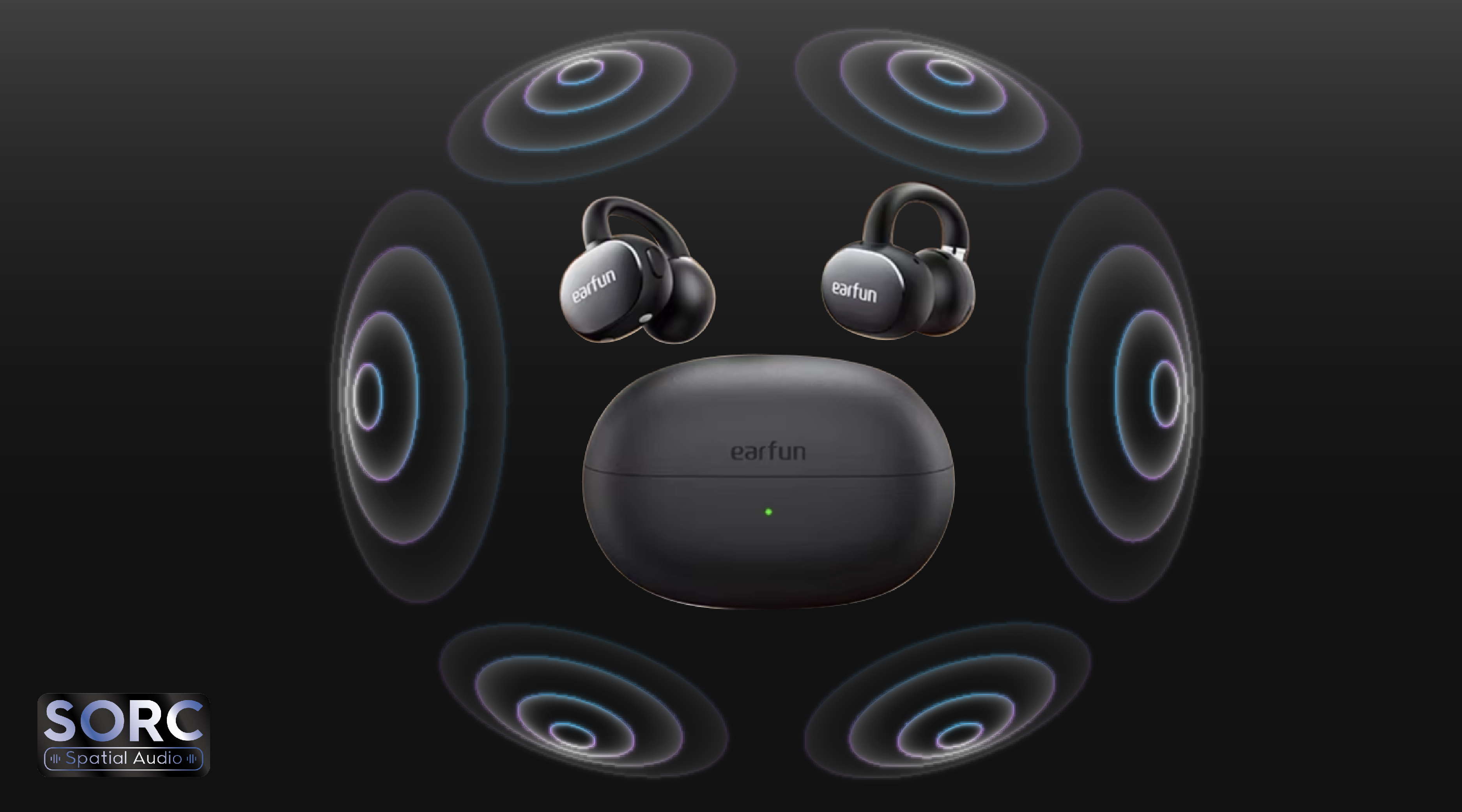
SORC Spatial Audio is an end-to-end spatial audio solution designed for edge devices. It integrates audio analysis, spatial modeling, binaural rendering, and acoustic scene reconstruction into a unified processing pipeline—from input signal to 3D sound field output—enabling consistent spatial reproduction of multiple sound sources under open acoustic conditions.
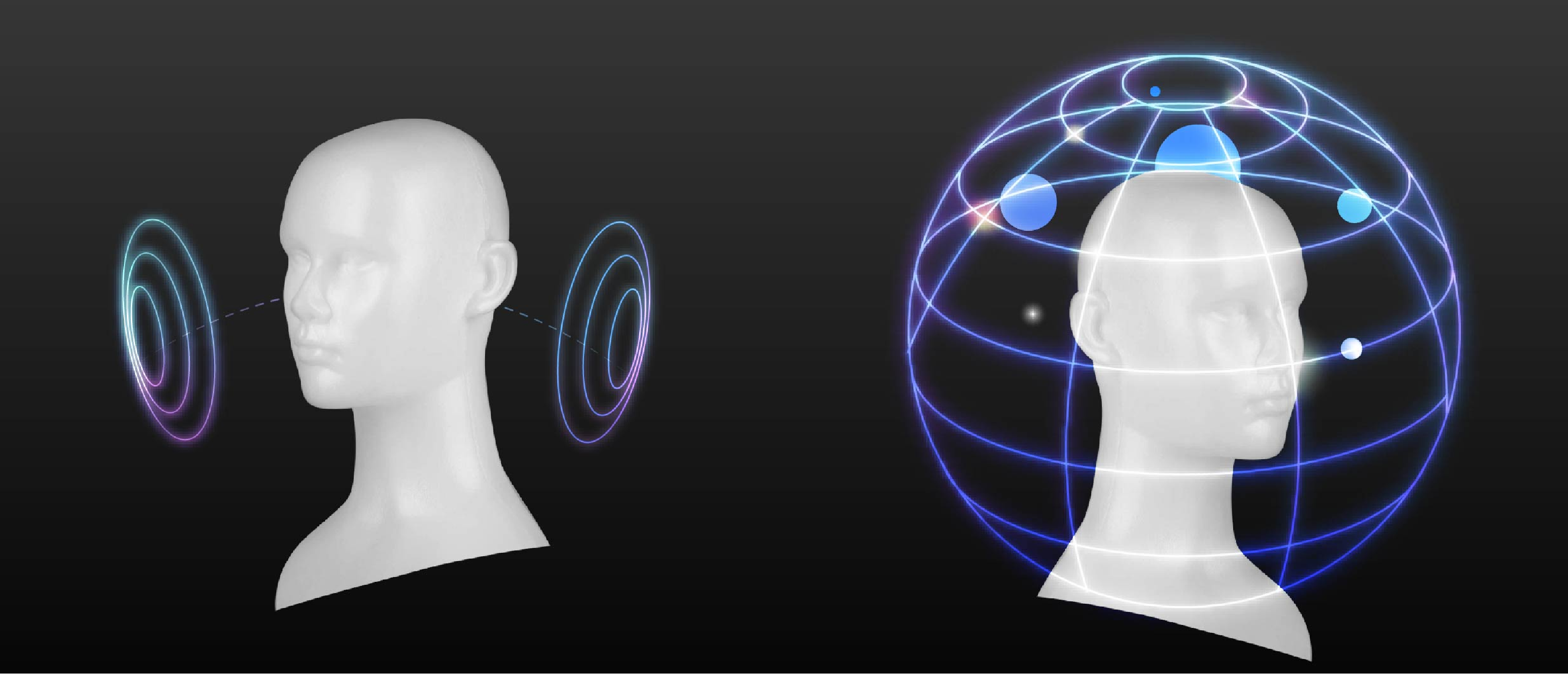
In open-ear designs, the absence of ear canal sealing reduces acoustic isolation, often resulting in sound field diffusion, unstable localization, and limited spatial depth. To mitigate these issues, the SORC framework improves signal controllability through source separation, applies HRTF-based binaural rendering for spatial localization, and incorporates room impulse response (RIR) modeling to reconstruct reflections and reverberation characteristics. This enables the formation of a 3D sound field with enhanced localization accuracy, depth perception, and spatial layering.
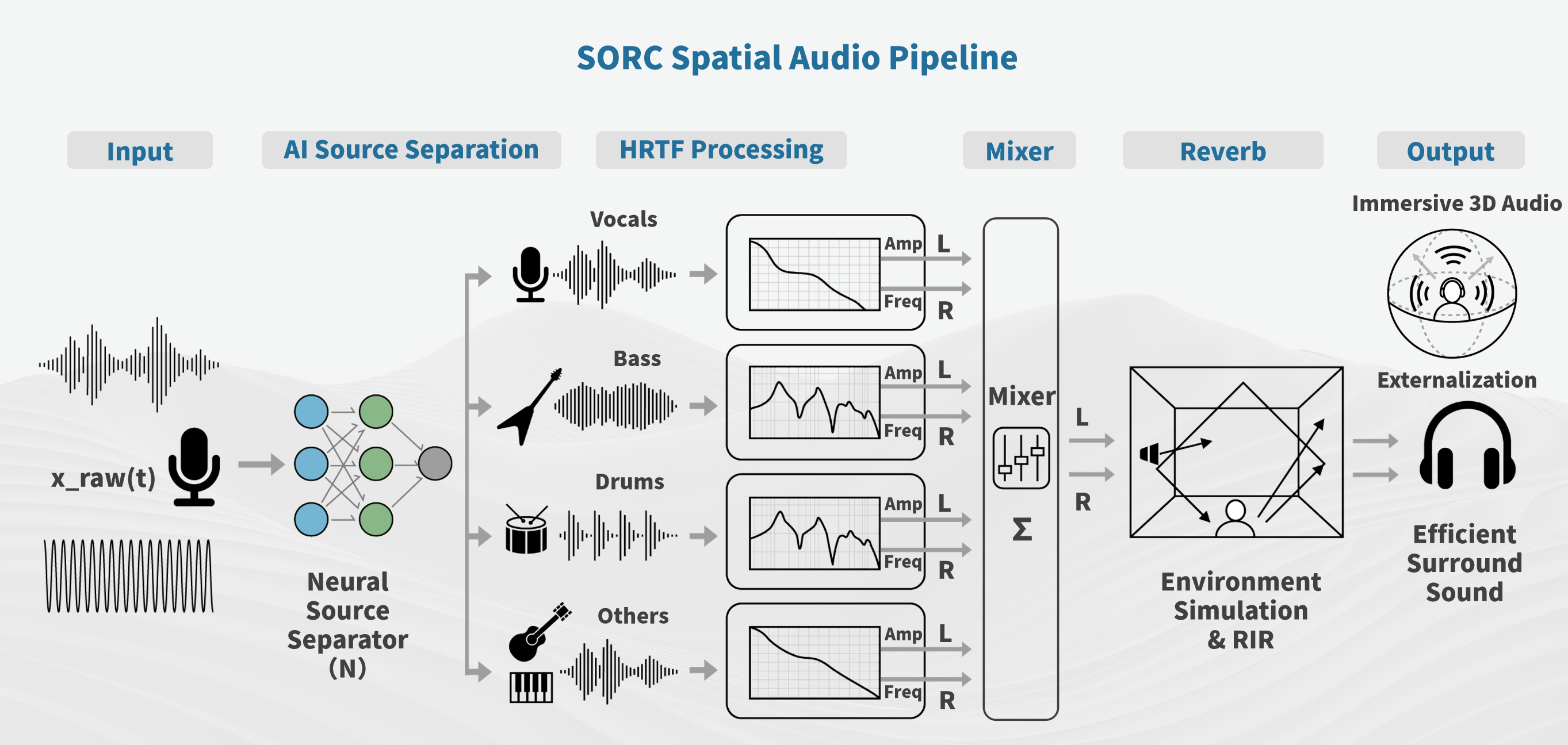
Unlike conventional audio enhancement approaches based on fixed effects or post-processing, SORC Spatial Audio focuses on spatial rendering and reconstruction. It improves externalization, allowing sound to be perceived as originating from positions in space rather than from within the device. In music and multimedia scenarios, this results in more stable vocal-background separation, consistent spatial positioning, and smoother spatial transitions, enhancing both immersion and realism.
From an implementation perspective, SORC Spatial Audio is not a standalone algorithm layer, but a lightweight, device-optimized architecture co-designed with acoustic structure, driver configuration, and system-level tuning. It is engineered to operate efficiently under constrained compute and power budgets, enabling low-latency spatial audio processing on embedded platforms.
Leveraging a complete acoustic engineering and mass production system, AncSonic aligns algorithm design with hardware performance at a system level, ensuring consistent spatial audio reproduction across different product form factors. The solution has been fully optimized for the EarFun Clip 2, and works in coordination with other audio processing modules such as bass enhancement and voice processing, achieving a balanced trade-off between performance, power efficiency, and user experience.
With its modular design and flexible integration, SORC Spatial Audio can be deployed across a wide range of devices—including earbuds, smart glasses, and other wearable audio platforms—enabling scalable adoption of spatial audio technologies. The launch of the EarFun Clip 2 marks a key milestone in the maturity and real-world validation of spatial audio in open-ear applications.
 前のニュース
関連ニュース
Making Waves in Times Square: AncSonic Brings Cutting-Edge AI Acoustic Technology to the World
2026.09.09
Appearing in Times Square marks an important milestone in AncSonic’s journey onto the global stage.
AncSonic × 1MORE | 1MORE HQ60 Flagship Over-Ear ANC Headphones Officially Launch
2026.08.21
The launch of the HQ60 also demonstrates the practical application of AncSonic’s edge AI acoustic technology in flagship consumer electronics.
When the Cabin Becomes a Mobile KTV: AncSonic’s Full-Stack Acoustic Solution for Mic-Free Karaoke
2026.07.01
AncSonic’s mic-free karaoke solution adopts a system-level acoustic processing architecture, covering the entire chain from pickup and interference suppression to sound rendering, delivering a clear, stable, and low-latency singing experience in complex in-vehicle acoustic environments.
Achieving Controllable ANC in Hybrid Driver Systems: AncSonic’s System-Level Acoustic Engineering Path
2025.12.24
AncSonic turns the industry’s most complex hybrid driver architecture into a controllable, mass-producible ANC system through deep system-level acoustic engineering.